
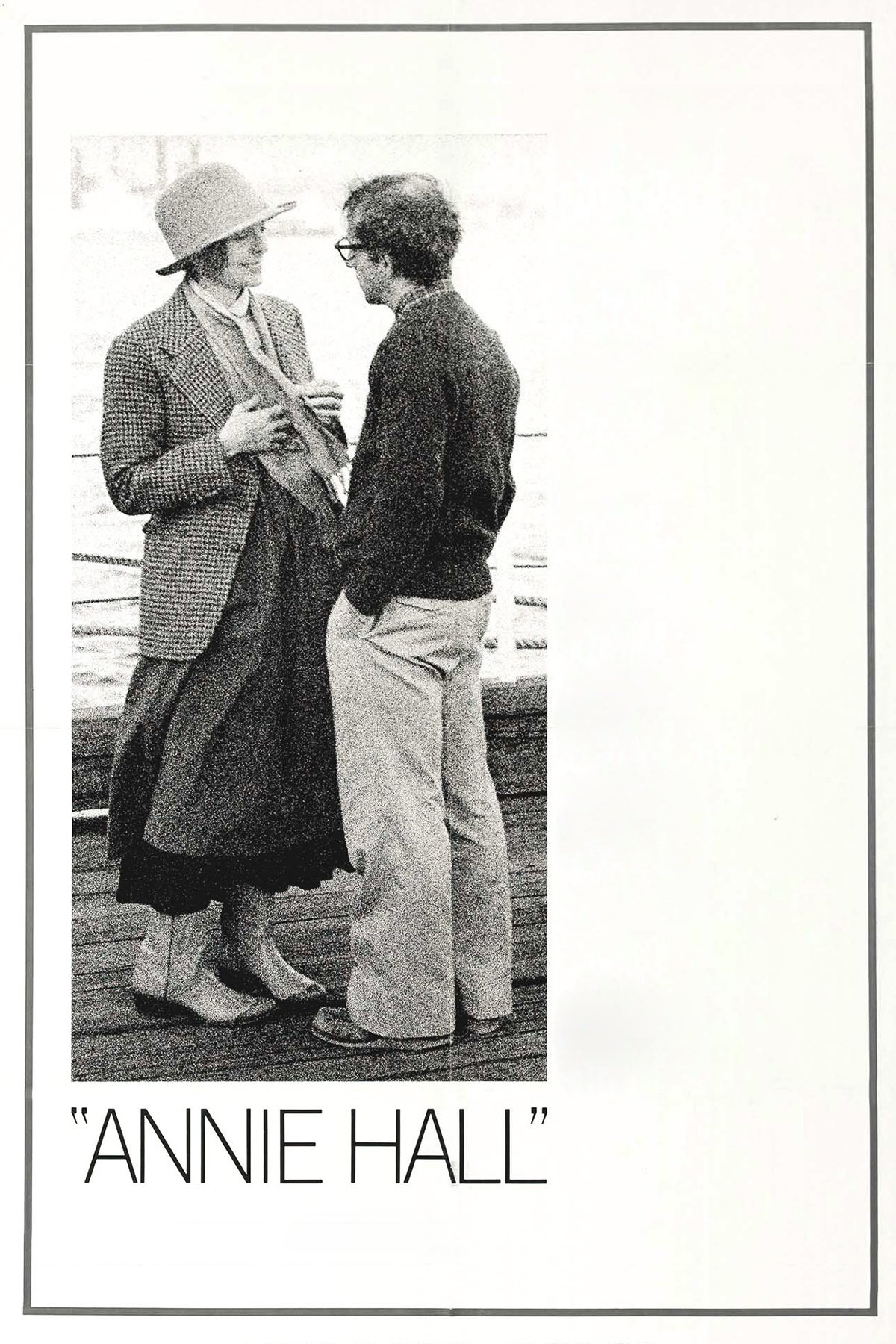
The Historical Landscape
I remember the first time I watched Annie Hall and felt as if I’d wandered into a cinema caught between eras—a story crafted at the tail-end of one American dream and the beginning of a far murkier worldview. For me, New York in the late 1970s wasn’t just a location, but a state of mind, defined by a mixture of anxiety and cynical self-awareness. The country, still reeling from Watergate and the Vietnam War, found itself groping for a sense of identity. Personal relationships seemed to matter more than ideology; the public sphere, tinged with suspicion, faded away in favor of private neuroses. Annie Hall was conceived at this precise cultural crossroad, embedded in the matrix of a society desperately searching for authenticity in an age thick with doubt.
In my mind’s eye, the streets of Manhattan during that period pulse with a haggard sort of glamor—neon-lit diners, intellectuals brooding over bad coffee, and an endless string of psychoanalysis sessions. What strikes me as remarkable is how the culture, half in love with itself and half weary from self-dissection, manifested so clearly in the film’s DNA. Inflation and energy crises haunted headlines, while the looming specter of crime lent urban life a certain edge. Simultaneously, the 1970s had become a breeding ground for new ideas about selfhood and sexuality, fueled in part by the residual momentum of the counterculture movements that had upended traditional mores only a decade before. That fermenting stew of change and malaise is, to my eye, palpable in every frame of Woody Allen’s breakthrough work.
What I found fascinating about this landscape was how creativity seemed to thrive in the churn. The New Hollywood directors had made their mark, but the blockbuster wave hadn’t yet washed away the smaller, more intimate explorations of what it meant to simply live—neurotic, hopeful, and never quite certain of happiness. Annie Hall didn’t just happen in 1977; it encapsulated the very essence of a culture trying to psychoanalyze itself onto firmer ground. In retrospect, I see the film as a time capsule—an impressionistic portrait of a country that has grown tired of manifest destiny and instead turned inward, in search of meaning in therapy offices, comedy clubs, and the intimate, uncertain spaces between two people.
Cultural and Political Undercurrents
Watching Annie Hall, I always sense the tremors of the women’s liberation movement and the age of self-examination humming beneath its surface. The 1970s were, for me, an era marked by a pendulum swing between radical upheaval and exhausted self-interrogation. The very fabric of gender relations was changing—women were carving out new roles for themselves, no longer content to slip into the supporting parts. I see how Diane Keaton’s Annie, with her androgynous fashion and unpolished candor, functions as both a symbol and product of this transformation. She’s awkward, hopeful, and searching, much like the women of her day, navigating uncharted emotional territory where old rules no longer apply.
Yet, Annie Hall is more than just a document of gender. It is, to my mind, an excavation of the politics of everyday life. When Allen’s Alvy Singer obsesses over therapy and existential dread, I can’t help but feel that his anxieties are echoes of a broader national mood—a creeping sense that institutions once taken for granted have failed and that comfort can only be sought in the personal. I think back to the endless stream of psychoanalysts, couples reading self-help books, and the cultural obsession with introspection—here, channeled through one neurotic comedian’s romantic travails. It is as if the film is asking not just “Who am I?” but “Who are we, after everything we believed in has crumbled?”
Even the film’s playful narrative structure—breaking the fourth wall, weaving in surreal flights of fancy, and jumping between time frames—feels to me like a rebellion against linearity and certainty. In those choices, I recognize the influence of a society disillusioned by official stories and grand narratives. I am reminded of New Journalism, the fractured fiction of postmodern writers, and the broader artistic quest for authenticity—to admit that life, like love, is confused, non-linear, and unresolvable.
On a political level, the film is notable to me for what it does not say as much as for what it does. The shadow of the failed 1960s utopias is everywhere; no one is championing the revolution, nor is anyone naïvely optimistic. Instead, the film covers its wounds with humor, neurotic analysis, and a devotion to small, intimate triumphs. Watching it, I feel I am standing at a cultural crossroads where the country has traded protest signs for self-deprecating stand-up, and idealism for irony.
The Film as a Reflection of Its Time
What stands out to me most is the way Annie Hall functions as both a mirror and a product of its historical moment. In Alvy and Annie’s fumbling, I see the romance and terror of vulnerability in a time when the old scripts—about gender, romance, and even what it meant to be an American—were being eagerly, if awkwardly, rewritten. I’m never able to shake the sense that the characters’ endless analyses and comedic diversions are coping mechanisms for a generation that saw the world become less certain and, paradoxically, more open.
Through its use of fragmented narrative, I feel the film sidesteps the traditional Hollywood arc of happily-ever-after. When I watch the story unfold, I see a subversive honesty in its refusal to tie up loose ends. Alvy and Annie don’t ride off into the sunset; instead, they drift apart, having changed one another in ways neither can quite articulate. In this, I see the shadow of the 1970s—an era that prized authenticity over fantasy, that found value in the process of searching rather than the comfort of closure.
The neurotic lens through which Allen sees the world strikes me as a byproduct of a culture freshly skeptical about grand solutions. These are people who joke to keep from crying, who intellectualize as a way of managing the unpredictability of both societal change and personal relationships. The film’s myriad references to psychoanalysis aren’t just comedic tics. For me, they’re a profound reflection of the era’s faith in interiority—a trust that, by peering into the self, one might arrive at answers that the outside world steadfastly refused to provide in the wake of political and economic disarray.
What I find most poignant is the way Annie Hall allows for the coexistence of love and disappointment, growth and failure, in the same breath. The awkwardness of the characters’ conversations, their therapy sessions, even their body language—these details sketch for me a generation determined to make peace with ambiguity. Watching the film, I feel as though I am sitting beside people who are learning, perhaps for the first time en masse, that there are emotions and desires for which no easy explanation exists.
The fashion, too, catapults me back into the heart of the era. Annie’s iconic vests, men’s ties, and baggy trousers weren’t just screen choices—they epitomized the collapse of rigid style boundaries, reflecting evolving social dynamics and a new sense of female self-determination. The sprinkled Yiddishisms, the sly nods to New York intellectual culture, and the cameos by real-life writers and celebrities remind me of a time when being smart and anxious was not merely tolerated, but lionized in popular culture.
I see the film as a document that refuses nostalgia, choosing instead to examine the cracks in post–Summer of Love ideals. It doesn’t offer the audience escapism, but rather something uncomfortably real: the uneasy, searching spirit of its time and place, rendered in all its brilliant, self-effacing confusion.
Changing Perceptions Over Time
Coming back to Annie Hall years after my first viewing, the shifting ways in which the film is received feel just as revealing to me as the movie itself. In the late 1970s, the frankness, self-conscious humor, and meta-narrative flourishes struck audiences as fresh and liberating—a cathartic antidote to both the excesses of old Hollywood romance and the bleak fatalism of Watergate-era cinema. I have met older viewers who remember the film as a mirror of their lives, affirming their experiences with a candor and irony that no previous mainstream romantic comedy had dared.
But as decades have passed, I’ve noticed an evolving conversation, one often tinged with a skepticism that mirrors the film’s own cynicism. There have been growing critiques regarding the centrality of Alvy’s neurotic male gaze, and the way Annie, despite her quirks, sometimes becomes a projection more than a person. Where once critics celebrated Annie Hall’s originality, I now observe that younger viewers sometimes bristle at its self-involved protagonist or the gender dynamics embedded within its story. These debates, to me, mirror the ongoing conversations in society about representation, power, and whose stories get told.
At the same time, Allen himself has become a far more controversial figure, casting a shadow that’s impossible for me to ignore. I find that, for many, revisiting Annie Hall now comes with a fraught mix of nostalgia and moral reckoning—questions about art, authorship, and audience that simply weren’t as loudly voiced in 1977. And yet, for all the changes in discourse, the film has retained a unique resonance among those grappling with the big, unanswerable questions of romantic life, personal failure, and the search for meaningful connection in a cynical world.
The endless dissection of Annie Hall—whether about its gender politics, its Jewishness, its meta-narrative wit, or its bittersweet ending—confirms to me its role as both product and provocateur of its era. I’m now struck not only by its singularity, but by how each new wave of viewers projects onto it their own anxieties and desires, using it as a lens to reflect and refract the dilemmas of intimacy in whatever moment they find themselves. The fact that its humor and heartbreak still inspire impassioned debate tells me that the questions it raised in 1977—a time when America searched for itself in therapy and late-night monologues—are still very much alive.
Historical Takeaway
When I sit with the film’s tangled skein of jokes, longing, and regret, I realize it gifts us a rare, unvarnished record of American life as the mid-century lights dimmed and the future remained unclear. Annie Hall does not show a world in equilibrium or a society at ease with itself—quite the opposite. I find that its genius lies in its willingness to look unflinchingly at the muddle of reality, in love as in culture, and to find both pathos and comedy in the inability to “figure it all out.”
To me, the film is a historical archive dressed in the guise of a neurotic romance—a testament to a time when Americans traded big collective dreams for the intimacy of doubt, exploration, and everyday introspection. It teaches me that eras are defined not just by what excites them, but by what troubles their collective soul. Annie Hall reveals the uncertainty, the tentativeness, and the bittersweet hope that thrived in the cracks of the late seventies, when every attempt at connection felt both more urgent and more fraught. It captures the feeling of seeking meaning when traditional guideposts have failed and when, for better or worse, the only roadmap left is the one written in the diary of human insecurity.
Looking back, I see Annie Hall as one of the most evocative time machines in cinematic history. It does not offer easy answers, but rather memorializes the messy negotiations we all undertake—with partners, with society, with ourselves—when the world refuses to be pinned down. By standing in the shadows of its own cultural moment, it continues to challenge me, and anyone else willing to watch carefully, to reckon with the lingering question at its heart: What does it mean to love, lose, and keep searching when certainty is gone for good?
To see how these real-world elements shaped the film’s impact, you may also explore its reception and legacy.
🎬 Check out today's best-selling movies on Amazon!
View Deals on Amazon