
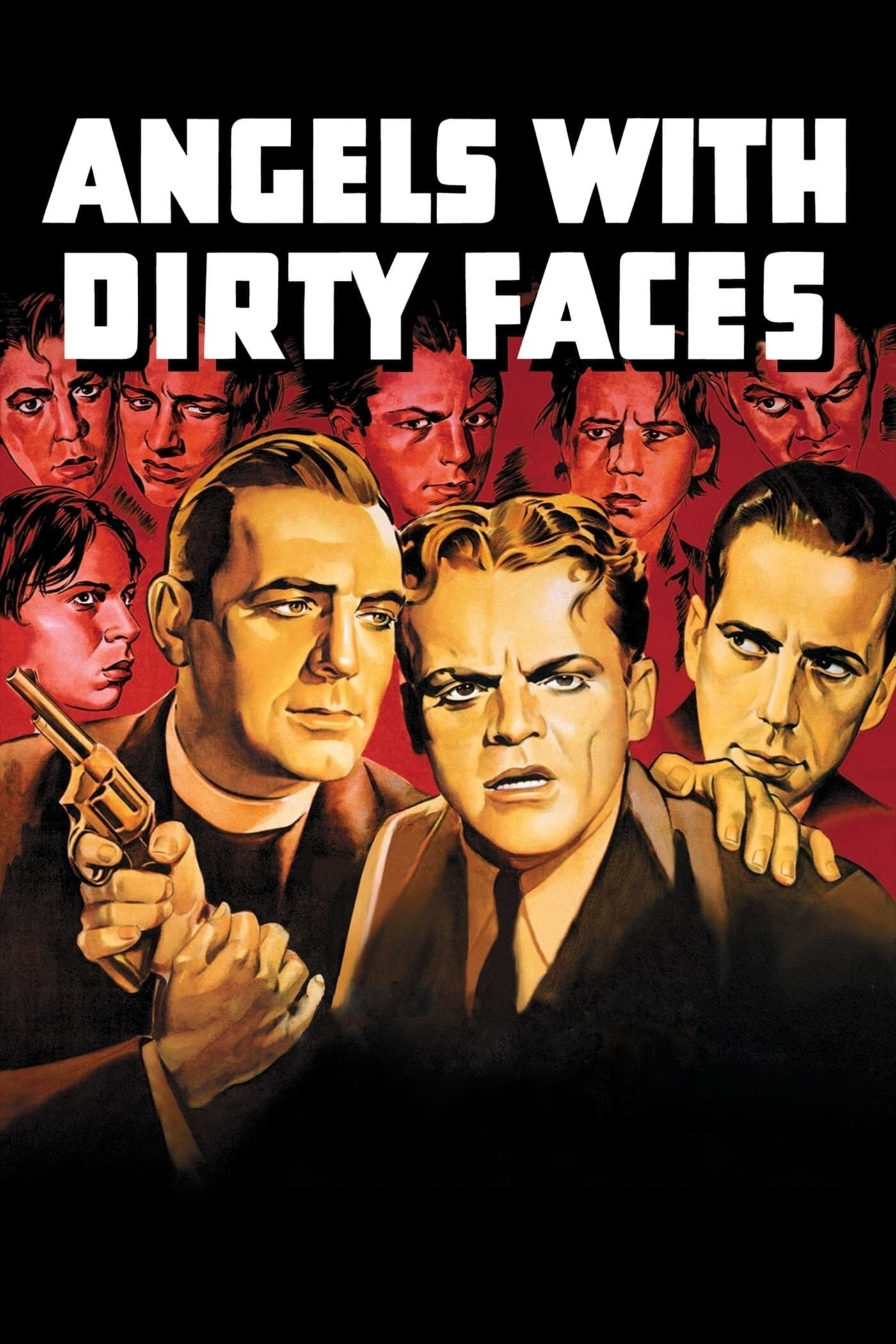
The Historical Era of the Film
When I first watched Angels with Dirty Faces (1938), I was immediately reminded of the unique paradoxes of late 1930s America. Stepping into its world meant stepping directly into a time marked by underlying uncertainty, where both hope and anxiety pulsed through society. I see this era, right at the edge of World War II, as incredibly formative—especially for American cinema. The United States in 1938 was still wrestling with the residual effects of the Great Depression. While on the surface, recovery had begun, the scars of economic hardship lingered in everyday realities and on movie screens. Jobs were still difficult to secure for many, and entire communities struggled to stabilize after years of deprivation.
Politically, I can’t ignore how the specter of totalitarian regimes in Europe—Nazi Germany and Fascist Italy—cast their long shadows across American consciousness. While the U.S. remained officially committed to isolationism, newsreels and newspapers overflowed with stories about the Spanish Civil War, Adolf Hitler’s increasing belligerence, and debates about intervention versus withdrawal. I find it impossible not to see how this fear and ambivalence bled into every aspect of the national mood, saturating the storytelling of the period. Angels with Dirty Faces arises against this backdrop, channeling an era balancing between clashing worlds: the old and the new, chaos and order.
Socially, urbanization stood at the forefront. I always picture bustling cities as the setting for 1930s drama—crowded tenements, teeming streets, and stark divides between those who had “made it” and those still stuck in poverty. Organized crime thrived amid such spaces, and I believe audiences of the time would have intimately understood the cycle of crime, punishment, and elusive redemption that the film so keenly illustrates. The pervasive influence of Prohibition’s legacy hung on: criminal syndicates, police corruption, and the formation of “gangster” as both folk hero and villain. These political, economic, and social conditions shaped the contours of Angels with Dirty Faces before a single frame was ever filmed.
Social and Cultural Climate
I interpret the social climate of late 1930s America as deeply contradictory. At one level, there was a palpable yearning for stability and traditional values, especially after a decade of volatility. But I also sense a rebellious undercurrent, a fascination with figures—fictional or real—who defied social norms and lived outside the boundaries of respectability. The era’s dominant attitude, as I see it, was a wary respect for authority that was always underscored by skepticism. American audiences were drawn to narratives featuring gangsters, lawmen, or outcasts, not necessarily because they endorsed crime, but because these stories dramatized the difficult choices between survival and morality.
Popular culture during the production era reveled in the mythology of the self-made man, yet society remained anxious about what the “wrong path” could lead to. I can’t help but see how the rise of mass media, especially radio and film newsreels, played into this duality. These platforms amplified both the achievements and scandals of the age, making even local criminals into national figures. The Hays Code, or Motion Picture Production Code, was strictly enforced at this time, compelling filmmakers to walk a fine line: depicting crime without glamorizing it. I find this tension palpable in almost every scene of Angels with Dirty Faces, as if the filmmakers themselves were negotiating the cultural anxieties of their audience in real time.
Popular attitudes toward urban youth, delinquency, and reform were shifting, too. There was much debate about the causes and remedies for juvenile crime. Advocacy for reform, particularly from religious and civic organizations, was on the rise. At the same time, a fascination persisted with youthful rebellion and gang culture, which I think speaks to the uncertain place of the next generation in a swiftly changing world. The image of the “Dead End Kids” in Angels with Dirty Faces was, to me, deeply resonant for contemporary viewers who recognized themselves—or their neighbors—in these troubled, energetic boys.
How the Era Influenced the Film
In retrospect, I see Angels with Dirty Faces as almost a cultural artifact—one that embodies the contradictions and crises of its production era. What stands out to me most is how closely the film’s story aligns with the real-life headlines about organized crime, public enemies, and the so-called “crime wave” of American cities. The 1930s witnessed notorious criminals like Al Capone, “Machine Gun” Kelly, and John Dillinger capture the nation’s imagination. Hollywood, tightly bound by the Production Code, had to tread carefully, thus shaping the antihero narratives into clear moral lessons: crime must never pay by the film’s end, regardless of the complexities depicted along the way.
I’m often struck by how the era’s anxieties surface in the film’s characterization. The friendship—and eventual opposition—between Rocky Sullivan and Jerry Connolly is more than narrative convenience. To me, it reflects a broader national debate: what factors drive youth into crime, and can society ever truly reform them? The presence of a dedicated priest as both moral counterweight and childhood friend underlines the growing influence of religious and reformist voices in American public life.
- The lingering effects of the Great Depression
- The popularity of gangster icons (real and fictional)
- Strict enforcement of the Hays (Production) Code
- Concerns about juvenile delinquency and urban poverty
Even visually, I perceive the film’s gritty realism and sharp shadows as symptoms of a society wary of darkness within its own ranks. Cinematography and set design lean heavily into the urban environment, reinforcing that sense of entrapment and cyclical poverty that pervaded national consciousness during the 1930s. I believe the decision to focus on redemption and sacrifice, rather than mere punishment, reflects a historically specific optimism: a hope that even the fallen might help the next generation avoid their fate. The film’s ending, in particular, feels to me like both a cinematic necessity and a mirror to contemporary moral debates.
Audience and Critical Response at the Time
My research into the film’s debut reveals a fascinating split in contemporary reactions. Audiences, worn down by headlines of economic struggle and urban violence, flocked to these stark, fast-paced gangster dramas. They responded with both enthusiasm and unease. I imagine seeing James Cagney’s magnetic portrayal of Rocky Sullivan on opening night—how thrilling it must have been for so many who recognized a little of themselves, or their struggles, in his desperate bravado. The unapologetic depiction of harsh urban life, combined with the emotional weight of the story, struck a chord with viewers who knew all too well the thin line between respectability and ruin.
On the critical front, reviewers praised the film for its gritty realism—Cagney’s performance, especially, drew accolades for its complexity and authenticity. Yet, I notice that many critics remained acutely aware of the Production Code’s influence. They often singled out how the film’s insistence on moral clarity—the need to show that crime did not pay—reflected overt pressure from censors. While some faulted the conclusion for feeling somewhat forced, I see an underlying admiration for the film’s ability to tackle difficult questions honestly within the limits of what was permissible at the time.
What I find especially poignant is the reaction to the Dead End Kids, whose raw energy injected a level of urgency into the debates over youth crime and reform. Their performances resonated with parents and policymakers alike, prompting discussions about the state of urban youth and the role of community intervention. The film thus operated not just as entertainment, but as a kind of social mirror—inciting both concern and catharsis in its viewers. These responses, in my reading, underscore how films like Angels with Dirty Faces could serve as a unique point of dialogue between the world onscreen and the one outside the theater’s doors.
Why Historical Context Matters Today
Each time I revisit Angels with Dirty Faces, I’m convinced that grasping its historical context is non-negotiable if one hopes to appreciate the film’s depth and impact. Without understanding the political and social realities of 1938—the aftershocks of the Depression, the anxieties about crime, the proliferation of moral codes—it’s easy to misread the film as simply a period gangster drama. What strikes me most is how little the concerns of that era—urban violence, youth corruption, conflicting models of masculinity—have truly faded. I see echoes of the same debates in headlines today, making the film feel both immediate and enduring.
For me, knowing how the era’s challenges shaped everything from casting choices to dialogue makes the artistic choices richer and more significant. The enforcement of the Hays Code, for example, wasn’t merely a restriction—it was an invitation for clever subversion, nuanced storytelling, and a different kind of realism. When I experience the taut tension between law and lawlessness in Angels with Dirty Faces, I’m really absorbing decades of collective fear, aspiration, and negotiation with authority. All of the film’s choices—its focus on reform, its unsparing depiction of poverty, its insistence on moral consequence—are illuminated by the anxieties of their moment.
Engaging with historical context, I find, also deepens empathy for both filmmakers and audiences. It reminds me that these stories were ways of working through real societal struggles, not just vehicles for escapist thrills. Social and economic pressures didn’t just hover in the background; they shaped every step of production and reception, giving the film a resonance that lingers today. Each element, from casting James Cagney as a complex antihero to foregrounding parochial reformers, was drawn from—and contributed to—a living dialogue about the American urban experience.
Above all, I believe that immersing myself in the world of 1938 enhances my own sense of the film’s stakes and achievements. It’s not just a story of crime and redemption—it’s a historical document, a snapshot of a nation on the verge of global upheaval, wrestling with its own values. For those willing to engage with its context, Angels with Dirty Faces becomes a far richer, more nuanced exploration of the pressures that shape individuals and societies alike.
After understanding the factual background, you may want to see how this story was received as a film.
🎬 Check out today's best-selling movies on Amazon!
View Deals on Amazon