
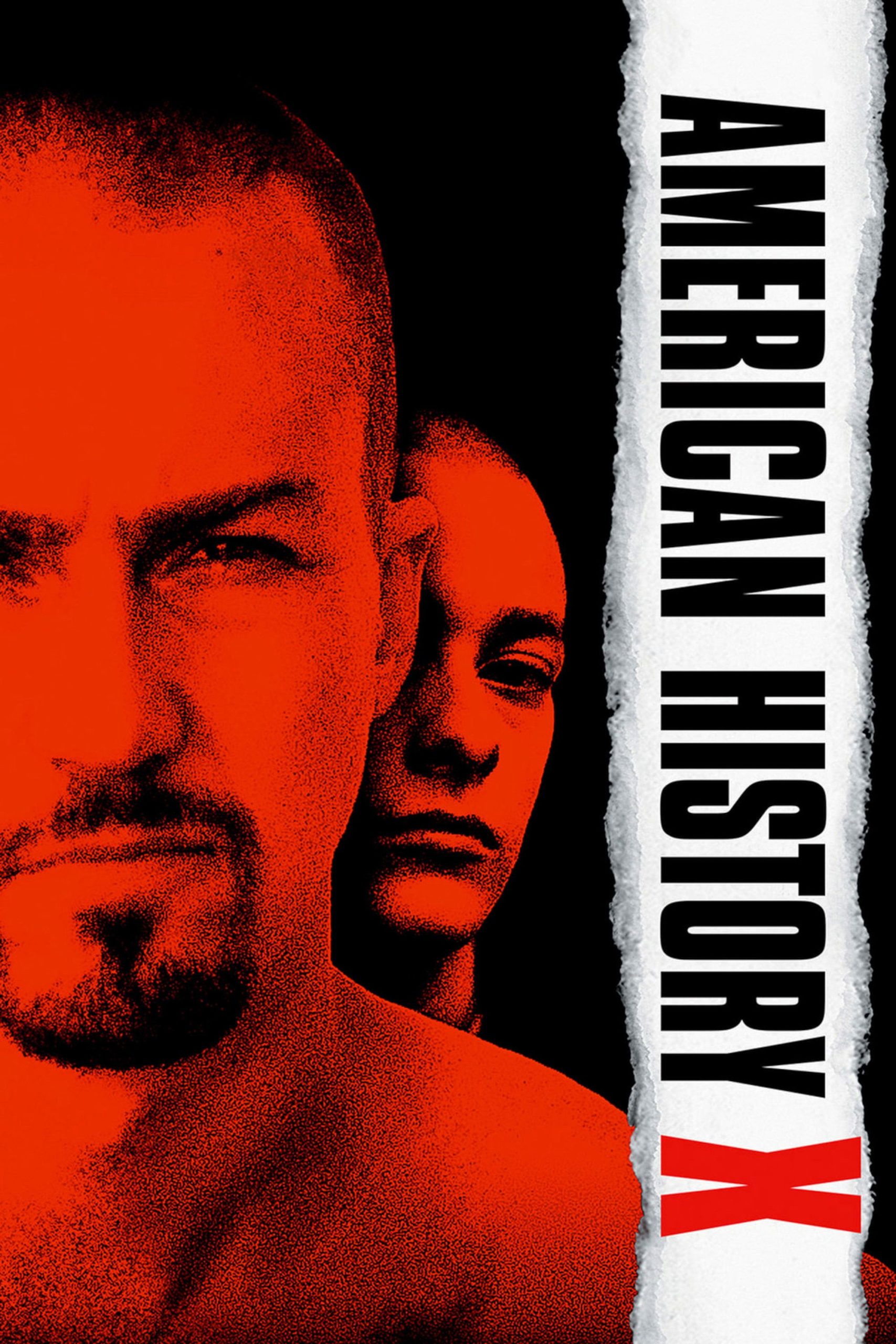
The Historical Landscape
I can still recall the uneasy charge that pulsed through late-1990s America—the sense of palpable contradiction between optimism for a new millennium and a gnawing anxiety about what remained unresolved. When I first encountered “American History X,” I instantly recognized it as a cinematic encapsulation of this tension. The era was punctuated by vibrant economic growth, with news cycles flooded by stories of rising tech fortunes and global expansion, but beneath the surface, there were persistent rifts that kept the country’s cultural psyche raw and unsettled. The aftershocks of the Los Angeles riots in 1992 still reverberated in everyday conversations. The Rodney King trial, the O.J. Simpson circus, and the Oklahoma City bombing had all underscored, to me, the volatility and unpredictability sewn into the American experience of the decade.
It was a world of contradictions. As I remember it, the mainstream media fluttered between images of American prosperity and the ugliness that still festered at the nation’s core. Issues of race, inequality, and violence persisted despite the veneer of progress. Politicians extolled American unity while news footage replayed incidents of church burnings or neo-Nazi rallies. When “American History X” arrived in 1998, I felt it cut through this static, presenting a brutal, unfiltered look at problems that many—including myself—found too easy to ignore in daily life. Watching it in that climate, I was struck by its direct confrontation with racism, domestic unrest, and the failures of institutions tasked with guiding the nation forward. This was no nostalgic remembrance of simpler times; instead, the film forced me to acknowledge the churning, unresolved anger that defined so much of the 1990s social and political landscape.
At the same time, I sensed in popular culture a restlessness—a compulsion to unpack uncomfortable truths. This was the decade of “Pulp Fiction” and “Fight Club,” of televised public confessions and shock jocks who marshaled the nation’s anxieties each morning. Everyone seemed to be challenging norms or seeking answers in places previously shrouded by taboo. For me, “American History X” fit perfectly into this evolving conversation: a film willing to linger on the ruins of the American dream, rather than offer comforting resolutions.
Cultural and Political Undercurrents
The more I reflect on the late 1990s, the more I see how “American History X” was animated by the fragile, reactive climate of the time. I never read the film as just a straightforward story about white supremacy—the very subject seemed intrinsically shaped by deeper cultural and political currents brewing across the country. In my lifetime, I had rarely seen mainstream films that risked confronting such virulent racism with this level of intimacy; more often, Hollywood shied away from the topic, relegating it to the margins or framing it in safely distant historical narratives.
Yet in the years leading up to the film’s release, there was a surge in hate crimes and a disturbing mainstreaming of fringe ideologies. I remember sensational headlines about the growth of militia movements and persistent questions about the American identity. The Southern Poverty Law Center and other watchdogs, which I followed closely, reported marked increases in neo-Nazi and skinhead group activities. Simultaneously, a larger national debate was raging about so-called “reverse discrimination,” stemming from long-standing disputes over affirmative action. For someone paying attention, the cultural dialogue of the late ’90s oscillated between broader calls for justice and a kind of defensive backlash—one that the film’s fictional Venice Beach neighborhood seemed to live out in miniature.
I also can’t overlook the enduring effects of the so-called “culture wars” from previous decades. The Reagan and Bush years had crystallized divisions on issues ranging from immigration and policing to gun rights and education reform, all of which shaped everyday conversations in the households of people I knew. These anxieties, in my experience, generated fertile ground for stories confronting the complexities of hate and reconciliation. So, when “American History X” appeared, it felt as though the filmmaker—whether consciously or not—was drawing from this roiling stew of fear, resentment, and hope. The movie didn’t emerge from a vacuum; it was an artistic response to forces fermenting in society’s shadows, only now coming uncomfortably into the light.
I think too about how youth culture in the 1990s was increasingly fragmented and suspicious of authority. Hip-hop and punk music, along with the grunge movement, styled rebellion as almost a birthright. Iconic albums by Tupac Shakur, Rage Against the Machine, and Nirvana all gave voice to a generation’s skepticism toward official narratives—voices that echoed in the film’s soundtrack and subcultural references. It always struck me that “American History X” wasn’t just about hate groups—it was about the magnetic pull of rebellion and identity formation in the face of uncertainty. The era’s anxieties about family dissolution, economic displacement, and community change all find their way, unmistakably, into the film’s marrow.
The Film as a Reflection of Its Time
What resonated most deeply with me was how “American History X” held up a cracked mirror to the late-’90s American soul. Rather than sanitize animosity or offer easy redemption, the film wallowed in its characters’ contradictions—mirroring a society desperate for healing but unable to shake its past. Watching Edward Norton’s chilling transformation—his character’s journey from hate-spewing zealot to man searching for forgiveness—I found myself forced to confront my own blind spots regarding both the roots of such hatred and the limits of rehabilitation. The film’s willingness to probe, without blinking, the familial and social roots of violent racism felt not just bold but necessary at a time when public discourse often shied away from asking “why” in favor of swift condemnation.
In my view, one of the most searing elements was the film’s depiction of intergenerational transmission of prejudice. I saw clear echoes of conversations I heard in kitchens, school hallways, and community centers at the time—whispered confessions of bitterness, often casually inherited from parents or reinforced by neighborhood mythology. The film’s central family seemed battered by economic decline and social fragmentation, mirroring what I observed in real-life communities struggling to redefine themselves after factory closures or demographic change. Those scenes, with their mundane yet stubborn hatreds, reminded me how rarely American culture is honest about the ways trauma festers within the home, not just on talk shows or street corners.
What left a deeper mark on me, though, was how the film’s black-and-white cinematography—woven with bursts of color—seemed to literalize the stark, opposing visions that characterized social debates of the era. I always read this stylistic choice as a comment on a nation eager to view itself in binaries: good and evil, us versus them, victim or perpetrator. Yet, as the film unfolds and its color palette returns, I felt challenged to acknowledge ambiguity and the possibility of transformation. To me, the film articulated in visual terms the era’s yearning for clarity and unity, while also admitting that the wounds of history resist neat closure.
I can’t help but think of the ways the film’s violence was simultaneously sensational and unflinchingly real. The infamous “curb” scene, which haunted conversations for weeks after I first saw the film, seemed engineered to shock complacent audiences out of passivity. Though many critiqued the film for its rawness, I understood such choices as a deliberate provocation—a way of forcing viewers, myself included, to wrestle with the brutal consequences of bigotry. It called for a kind of moral reckoning, not just at the level of plot but within the fabric of an audience’s social consciousness. The film’s refusal to resolve these traumas in a Hollywood ending felt, to me, like an honest reflection of America’s own inability to simply “move on” from its most painful sores.
Most of all, I continue to appreciate how “American History X” laid bare the fragility of redemption narratives. In the late 1990s, cultural pundits seemed obsessed with the possibility of personal transformation—as seen in the rise of daytime talk therapists, recovery memoirs, and self-help movements. Yet, watching the film, I was reminded that individual change often falters when the community around remains stagnant or resistant. The film’s tragic conclusion hammered that truth home for me: for all the talk of healing and rehabilitation, there remained structural barriers to reconciliation that no single act of atonement could resolve. This was a tough pill for an era so eager to believe in second chances but so unsure how to support them.
Changing Perceptions Over Time
With the benefit of hindsight, I’ve watched the legacy of “American History X” shift and evolve in ways that bring new insights with each reappraisal. When the film first premiered, I recall how many in my circles viewed it as a brave, almost reckless confrontation with contemporary racism, lauded for daring to tell an ugly truth that others would only whisper. For some younger audiences, including myself at the time, it felt like an urgent warning about the seductive dangers of extremism and the subtle hand of influence. The initial impact—judging by reviews, classroom discussions, and culture columns I read—suggested that the film had tapped directly into the zeitgeist, forcing viewers to question both their sympathies and prejudices.
However, as the years rolled on and memories of the 1990s faded, the film’s status became more complicated. I noticed a growing discomfort, especially among newer generations and social critics, about the film’s depiction of hate. Some increasingly questioned whether the film risked glamorizing its central anti-hero; others debated whether the story’s focus on a white protagonist’s journey toward “redemption” slighted the experience and agency of the film’s Black characters. I grew increasingly aware of critical essays and online debates—particularly as the climate around race in America changed—interrogating the film’s narrative choices and what those choices revealed about lingering blind spots in Hollywood’s approach to sensitive material. The once-revered “bravery” of the film became, in some quarters, a source of contention.
I’ve also noticed “American History X” recur in discussions about radicalization and deradicalization, especially as online hate groups became more visible in the 2010s. Its relevance, for many, was renewed with the resurgence of white nationalist violence and the spread of extremist ideologies across digital platforms. Watching the film a decade after its release, I found that the depictions of youth being drawn into hate rings—often through loneliness or anger—had taken on new resonance, echoing what we now see amplified by social media algorithms and internet echo chambers. What was once a local, community phenomenon depicted in the film was now global, more networked, and, in some ways, more insidious.
That being said, I can’t ignore how the film remains a staple in classrooms, college lectures, and diversity workshops. To this day, friends and colleagues of mine recount its power as an educational tool—a way to spark necessary, sometimes heated, dialogue across generations. While debates over the film’s limitations continue, I am always struck by its enduring ability to provoke deep reflection and self-examination. Whether viewed as flawed or prescient, the film retains a rare immediacy, the kind that transforms intellectual exercises into visceral reckonings.
Historical Takeaway
Each time I come back to “American History X,” I am reminded of what it means to be alive in a country deep in the throes of self-examination. The film, in my estimation, reveals a 1990s America deeply unsettled—at once urgently seeking catharsis for its centuries-old wounds, but held back by fear, denial, and inertia. It exposes the distance between national ideals and the difficult, incremental work of healing. What I take away, most of all, is the sense that for all the era’s rhetoric about progress, the most fundamental struggles remained stubbornly unresolved. The violence, the longing for belonging, the seductive logic of hate—all of these sprang, in my view, from an American identity battered by history, yet still longing for renewal.
Ultimately, what I’ve gleaned from my years of living with “American History X” is not some neat lesson about the triumph of good over evil, but a much murkier realization: that the fight against hate is never finished, and that the line between villain and victim is often heartbreakingly thin. The film demands, at least of me, a relentless honesty about the forces shaping both individuals and the societies they inhabit. It stands as both warning and plea, echoing still through cycles of violence and reconciliation that have not diminished with time. In holding up the unvarnished mirror, “American History X” delivers a stark verdict on its era—one I believe we ignore at our peril.
To see how these real-world elements shaped the film’s impact, you may also explore its reception and legacy.
🎬 Check out today's best-selling movies on Amazon!
View Deals on Amazon