
The Historical Landscape
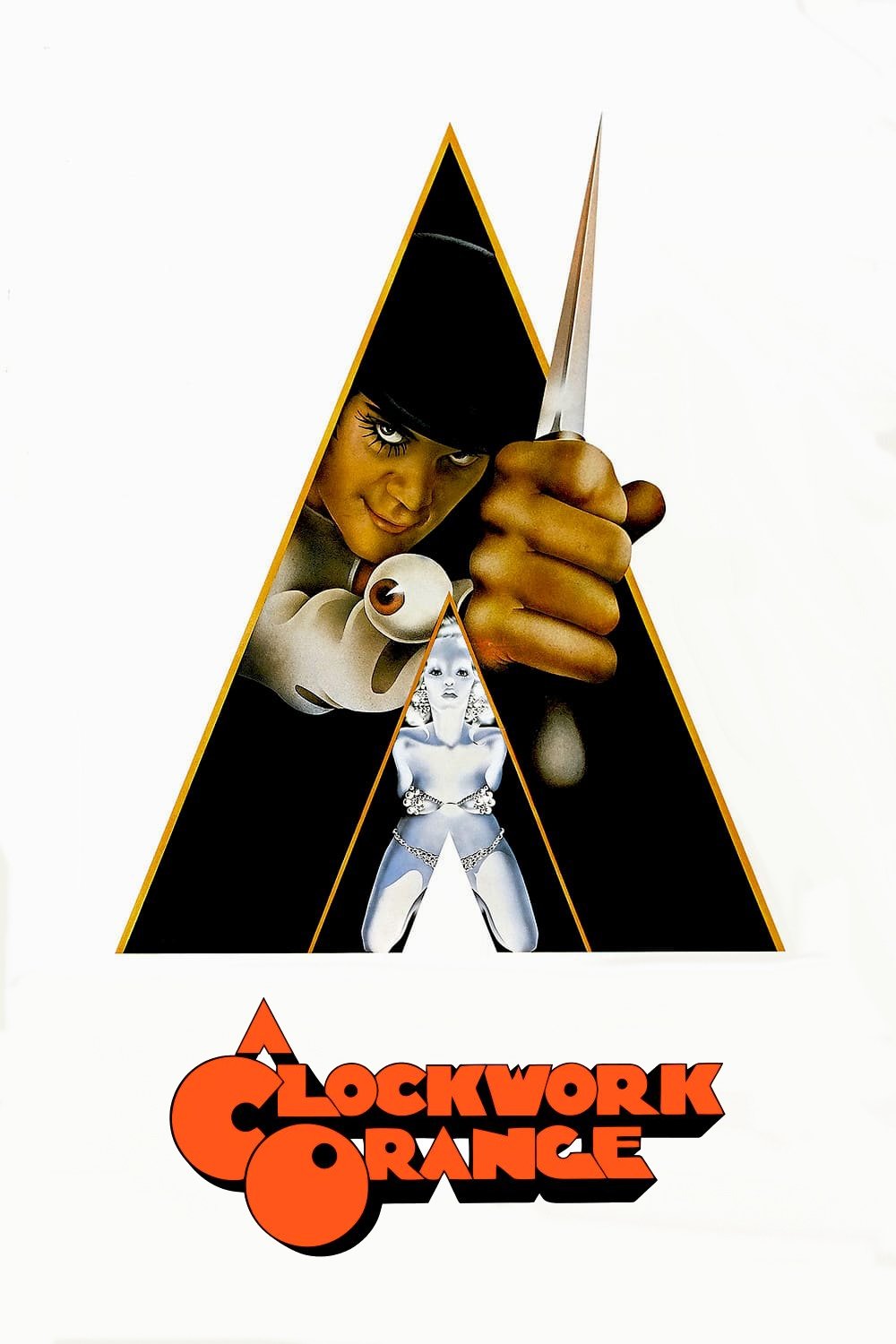
The release of “A Clockwork Orange” in 1971 came at the crossroads of a tumultuous and dynamic era. The late 1960s and early 1970s were a time of profound social unrest, shifting moral boundaries, and rapid technological advancement. Across both sides of the Atlantic, the postwar optimism that had characterized the 1950s was fading in the face of political upheaval and public disillusionment. In Britain, where the film is both set and produced, the swinging sixties had given way to a sense of malaise. Economic stagnation, labor strikes, and the slow unraveling of post-imperial confidence cast a pall over public life. Similarly, in the United States, the optimism of the Kennedy years had been supplanted by the quagmire of Vietnam, mounting civil rights struggles, and the specter of Watergate.
The youth counterculture, having peaked just a few years earlier, was morphing into something darker and more confrontational. The utopian ideals of peace and love gave way to a confrontation with the limits of freedom, authority, and personal responsibility. Iconic movements—the May 1968 protests in Paris, anti-war demonstrations across Western capitals, and the growth of radical fringe groups—underscored a widespread questioning of traditional institutions and social values. The rise of mass media and television accelerated these transformations, bringing the world’s upheaval into living rooms and making public crises feel immediate and personal.
Within the sphere of popular culture, cinema was experiencing its own revolution. Filmmakers in both Europe and America were breaking away from restrictive studio systems, adopting a more auteur-driven, experimental approach. Movies became bolder in theme, style, and content, reflecting audiences’ growing appetite for honesty, controversy, and the unvarnished reflection of reality. It was against this backdrop of intellectual ferment and social instability that Stanley Kubrick’s adaptation of Anthony Burgess’s dystopian novel emerged, shocking audiences and igniting passionate debate.
Cultural and Political Undercurrents
Beneath the surface of “A Clockwork Orange” lies a web of cultural and political anxieties unique to its historical context. The late 1960s and early 1970s were marked by fears of rising street crime, particularly among disaffected youth. Sensational headlines about hooliganism and moral decay pervaded the British tabloid press, stoking fears of social disorder. At the same time, politicians and policymakers grappled with questions about the role of state authority in curbing violence and the boundaries of individual autonomy. The debates about criminal reform, rehabilitation versus punishment, and the limits of governmental intervention echoed loudly in parliaments and public discourse.
This was also an age when theories about psychology and the human mind were rapidly evolving. The popularity of behaviorism—a school of thought that treated human beings as organisms whose behavior can be conditioned and controlled—was at its zenith. The anxieties surrounding manipulation, whether by governments or the media, were palpable. Fears over the loss of individuality in the age of consumerism, surveillance, and mass communication found their way into both popular culture and academic treatises. Films, novels, and essays of the era frequently interrogated the potential costs of trading liberty for security or social stability.
Moreover, the cultural ferment of the time saw a clash between permissiveness and conservatism. The sexual revolution was challenging longstanding mores. New freedoms in art, language, and self-expression were being tested in public spaces, courtrooms, and creative industries. Yet this liberation sparked an equal and opposite reaction among segments of society anxious to preserve traditional values. Reflecting these tensions, “A Clockwork Orange” emerged as both a product and a critique of its cultural moment, interrogating the very nature of morality, authority, and control.
The Film as a Reflection of Its Time
Stanley Kubrick’s “A Clockwork Orange” serves simultaneously as a portrait of contemporary fears and a warning about the potential trajectory of society. The film’s vision of a near-future Britain riven by youth violence and authoritarian overreach is deeply rooted in its historical moment. The iconic “droogs”—Alex and his gang—are not simply science fiction boogeymen; they are exaggerated avatars of real fears about wayward youth, lawlessness, and the seeming disintegration of social order. Their hyper-stylized violence, shown with deliberate aesthetic detachment, reflected a growing public concern about the desensitization to brutality fostered by both mass media and modern life.
Equally telling is the state’s response to Alex’s criminality: the reliance on psychological conditioning, embodied in the infamous Ludovico Technique, mirrors the era’s fascination with—and suspicion of—behavioral science. By depicting a society where the forces of order seek to root out evil not through engagement or reform, but through the mechanistic eradication of free will, Kubrick dramatizes contemporary debates about the moral boundaries of state power. Should society manipulate individuals for the collective good, or is the ability to choose—even to choose badly—sacrosanct? The film offers no easy answers, reflecting the ambiguous outcomes of its own policy discussions.
Visually and narratively, “A Clockwork Orange” captures the discordant energy of its age: the collision of modern and retro styles in costume and set design, the juxtaposition of classical music and ultraviolence, the ambiguity of sympathy and revulsion elicited from the audience. The language itself—a blend of slang, Russian, and neologism—evokes both the breakdown and reinvention of social communication. The dominant mood is one of dislocation, a sense that familiar structures—moral, political, and linguistic—are being called into question, echoing the prevailing uncertainty of the early 1970s.
Changing Perceptions Over Time
Upon its release, “A Clockwork Orange” provoked visceral reactions. Lauded by some as a masterpiece of cinematic daring, it was simultaneously condemned as decadent, dangerous, and inflammatory. In the United Kingdom, the film became the center of intense controversy, blamed for inciting copycat crimes and prompting public debate about the social responsibilities of artists. Kubrick himself withdrew the film from circulation in Britain for almost three decades, wary of its unintended consequences. Across the Atlantic, American audiences reacted with a mix of shock and fascination, sparking discussions that ranged from censorship to the psychology of violence.
In the years since, the lens through which the film is viewed has shifted. Later generations, growing up in a different media landscape and with new social concerns, have reassessed the film’s core messages. What once seemed a dangerous provocation now strikes some as a complex exploration of freedom, coercion, and the construction of morality. The aestheticized violence, once shocking, became the subject of critical inquiry: did Kubrick intend to seduce or repulse? Debates raged over whether the film critiques social engineering or inadvertently glamorizes anti-social behavior. As real-world debates about rehabilitation, state power, and surveillance persisted—adapting to new contexts of terrorism fears and digital monitoring—the film’s prescience became ever more apparent.
Film scholarship has also expanded, with academics viewing “A Clockwork Orange” as a crucial artifact of the transition from 1960s countercultural optimism to a more cynical and fragmented 1970s outlook. The film’s skepticism about easy solutions, its ambivalence about progress, and its murky moral terrain have all become points of fascination. Viewers today, looking back from a world shaped by rapid technological change and renewed discussions about the nature of freedom, see not only a period piece but also an enduring meditation on the challenges of modernity.
Historical Takeaway
“A Clockwork Orange” offers an unflinching portrait of a world grappling with the end of postwar innocence and the birth of modern anxieties. Through its provocative imagery and narrative structure, the film illuminates the tensions that characterized the early 1970s: uncertainty about the boundaries of order and liberty, skepticism about the promises of science and social engineering, and an enduring ambivalence about the consequences of individual choice. By refusing easy moral certainties, Kubrick’s film encapsulates the era’s propensity to question all that was once unquestionable.
The film’s continuing relevance testifies to the struggles that defined its age—struggles that remain with us in new forms. It stands as a testament to the era’s willingness to confront difficult truths and to probe the gray areas between good intentions and unintended outcomes. In presenting a society that tries to eradicate evil by extinguishing choice itself, “A Clockwork Orange” asked its original audience—and all those who have followed—to reckon with what it means to be both free and responsible, and to consider the true price of security. The film endures not only as a mirror to the anxieties of its own day, but also as a challenge to every era that would ponder the delicate balance between order and freedom.
🎬 Check out today's best-selling movies on Amazon!
View Deals on Amazon