
The Historical Landscape
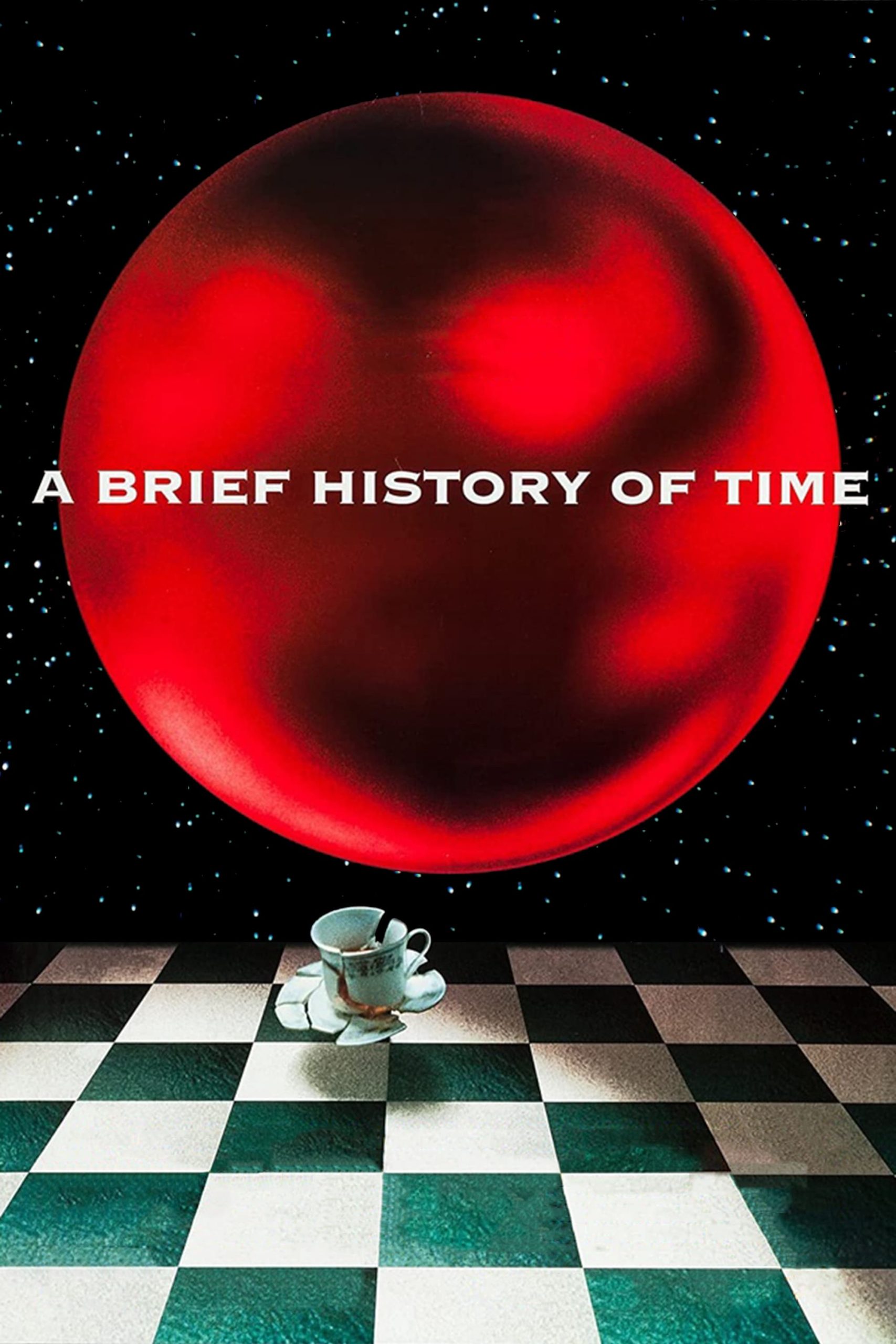
In the early 1990s, the world was balancing on the delicate edge of a new era. 1991 marked the closing chapters of the Cold War, as the Soviet Union teetered on the brink of dissolution, and the global political stage underwent seismic shifts. The previous decades’ anxiety and competition between superpowers had begun to give way to aspirations for global cooperation, technological advancement, and a redefined sense of possibility. Socially and culturally, the West was characterized by both optimism about scientific progress and uncertainty about its ethical and philosophical implications. In parallel, the rise of cable television and home video was reshaping media consumption, while computer technologies began their ascent from niche to household essentials. Within academia and the public imagination, science was no longer the sole purview of cloistered experts; it was being popularized with a zeal not seen since the Space Race. Education, especially in the sciences and mathematics, found renewed importance in public discourse. It was within this confluence of endings, beginnings, and burgeoning curiosity that “A Brief History of Time,” a documentary based on Stephen Hawking’s groundbreaking book and directed by Errol Morris, made its debut in 1991. This was an era deeply invested in understanding the expanding universe—both literal and metaphorical—that humanity faced after decades of rapid change.
Cultural and Political Undercurrents
The early 1990s bore the marks of significant ideological transformation. Political boundaries were dissolving, and identity itself was in flux—questions of what it meant to be a nation, a scientist, or even a human being were all being renegotiated. The documentary’s subject, Stephen Hawking, and by extension the very nature of cosmological inquiry, became a touchstone for broader discussions about the power and limitations of human knowledge. Major advancements in physics, such as the increased mainstream attention to black holes and quantum mechanics, paralleled public fascination with ideas that once seemed the stuff of science fiction. At the same time, disability rights were entering a new phase, with landmark legislation such as the Americans with Disabilities Act (ADA) being enacted in 1990. Hawking’s battle with motor neuron disease and his palpable presence as a scientific authority highlighted shifting attitudes toward ability, individuality, and perseverance. Meanwhile, the specter of environmental crises, new genetic technologies, and the persistent question of “what comes next” inspired both unease and hope. The cultural psyche was marked by a search for meaning and continuity in an age that seemed to be accelerating beyond previous boundaries. The emergence of the personal narrative in documentary filmmaking—rather than mere recounting of facts—mirrored larger social trends advocating for diverse perspectives and humanizing voices behind revolutionary ideas. In this context, “A Brief History of Time” can be understood as a cultural artifact shaped not only by the fame of Hawking’s scientific contributions, but also by the era’s hunger for accessible genius and stories of human fragility meeting profound insight.
The Film as a Reflection of Its Time
“A Brief History of Time” stands as a product of its era’s unique intersection of science, philosophy, and storytelling. Errol Morris, famed for his investigative documentaries, departed from the tradition of strictly educational science films, weaving a narrative that fused rigorous scientific exploration with the intimate biography of Stephen Hawking. This duality echoed the early 1990s’ fascination with marrying the personal and the universal—the film brought abstract concepts like singularities, the Big Bang, and the fabric of time into the realm of the personal, framed by Hawking’s own remarkable life and challenges.
The film’s visual and sonic landscape—marked by stylized interviews, striking recreations, and Philip Glass’s minimalistic score—resonated with a growing appetite for documentaries as complex works of art, not merely conduits for reporting facts. The documentary made Hawking’s theories accessible to lay audiences, reflecting a democratizing spirit in science communication encouraged by the era’s new media technologies. The rise of “the public intellectual” in the late 20th century is keenly felt here: Hawking, with his synthesized voice and indomitable intellect, became an international figure emblematic of the period’s drive to bridge the gap between scientific elites and the public.
Additionally, the film’s willingness to dwell on Hawking’s struggles with ALS, his family background, and the philosophical implications of his work spoke to the era’s evolving views on science’s social context. There was a growing recognition that scientific ideas did not emerge in a vacuum, but were deeply enmeshed in their creator’s lived experience and the society around them. In this sense, the documentary’s narrative approach reflects broader trends toward acknowledging the human stories behind epoch-defining discoveries.
Changing Perceptions Over Time
Over the decades since its release, “A Brief History of Time” has been subject to shifting interpretations—often revealing as much about society’s changing relationship to science and biography as about its subject matter. When it emerged, the film functioned as a bridge: it introduced Hawking, his theories, and his persona to a world only beginning to appreciate the stakes and scale of cosmological inquiry. For audiences in the early 1990s, the notion that time and space were malleable, or that the universe lay open to human understanding, felt exhilaratingly radical, and Hawking’s personal narrative provided inspiration amid fears of impersonal technological change.
As years passed and the new millennium dawned, science documentaries proliferated, and public science figures—from Neil deGrasse Tyson to Brian Greene—became fixtures on television and digital platforms. In retrospect, Morris’s film is seen as a forerunner, both in form and content. Its unwillingness to simplify complex ideas, coupled with a deep empathy for its subject, established a standard for later works that sought to illuminate both the technical and emotional dimensions of scientific endeavor.
Yet in the wake of increasing skepticism toward science in some quarters and the rise of “celebrity scientists,” the film’s meditative pace and philosophical undertones may strike new viewers as simultaneously nostalgic and prescient. The tension between public curiosity and scientific authority, already present in 1991, has only intensified. Furthermore, contemporary views on accessibility and disability have evolved; where Hawking’s presence was once seen primarily as an emblem of triumph over adversity, today it also sparks nuanced discussion on how society frames narratives of disability and genius. The film’s historical value has thus grown, as it captures a moment when scientific accomplishment, personal struggle, and the hunger for wonder found new ways of converging.
Historical Takeaway
From a historian’s vantage point, “A Brief History of Time” is more than just an account of one scientist’s achievements; it is a touchstone for the broader cultural currents that defined the early 1990s. It encapsulates optimism in the power of human intellect to uncover cosmic truths, even as society wrestled with its own limitations—be they physical, political, or existential. The film’s hybrid narrative approach, blending personal biography with ambitious scientific exposition and cinematic artistry, mirrors an age that sought meaning through synthesis: the merging of disciplines, the blending of personal and collective stories, and the negotiation of scientific advancement with the perennial search for significance. In illuminating the life and work of Stephen Hawking just as humanity stood poised between eras, “A Brief History of Time” reveals an age eager to make the mysteries of the universe accessible, even as it acknowledged the profound mysteries at the heart of the human condition. It stands as a cinematic document born of a specific moment when curiosity, empathy, and innovation converged to expand not only what we knew about the cosmos, but about ourselves.
🎬 Check out today's best-selling movies on Amazon!
View Deals on Amazon