
The Historical Landscape
The year 1968 was a crucible of transformation—a moment when the world seemed to stand at the very edge of the future, uncertain whether it would leap forward into unprecedented advancement or spiral into conflict and chaos. In the United States, the Vietnam War raged on, spreading dissent and division through the nation’s streets and campuses. The Civil Rights Movement pressed inexorably forward, its victories overshadowed by assassinations and eruptions of violence. Around the globe, the Cold War cast a shadow that permeated not just politics, but the ordinary psyche of daily life; the arms race was no longer just theoretical but a persistent thrum of anxiety beneath every news broadcast and dinner-table conversation.
At the same time, the Space Race had ascended from mere competition to a central, almost mythic motif. John F. Kennedy’s challenge to land a man on the moon before the decade ended was nearing fulfillment, and every rocket launch or cosmonaut’s journey transfixed millions. In an era typified by both fear of technological overreach and dreams of modern marvels, the prospect of space travel took on a quality that was both hopeful and ominous. Television brought visions both horrifying and wondrous into living rooms: riots and assassinations, stunning images of Earth from orbit, new sounds and faces redefining popular culture. The boundaries between science, fiction, and the possible blurred.
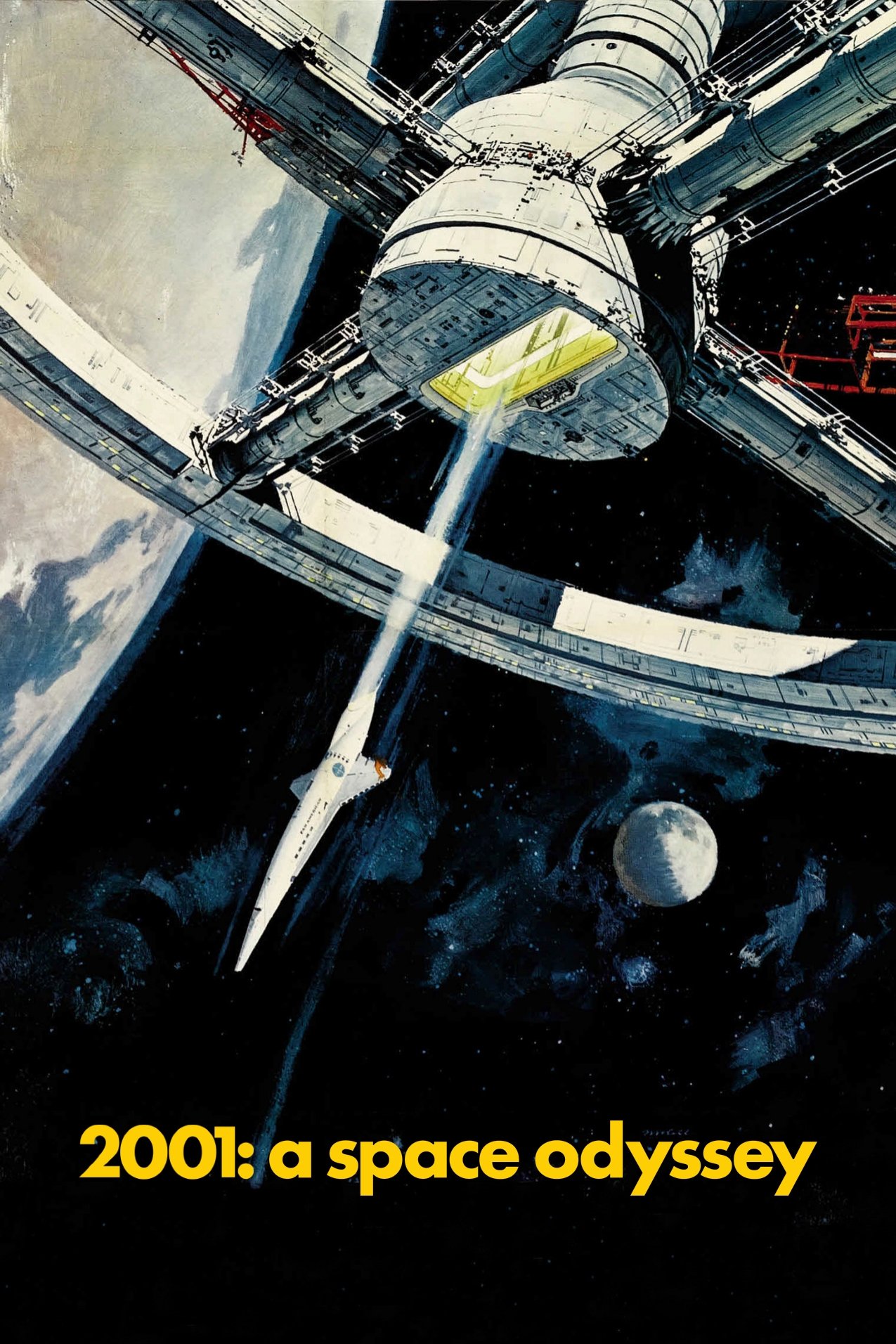
Released into this climate, Stanley Kubrick’s “2001: A Space Odyssey” emerged as more than just a film; it crystallized the contradictions and aspirations of its era. Its production was as ambitious as the society from which it sprang, deploying a scale of technological innovation rarely seen outside the very NASA programs it echoed. The film spoke to a world that had grown both weary and expectant—a species perched between surrender to machine logic and the hope of achieving something numinous, just beyond reach. “2001: A Space Odyssey” would become, in essence, a barometer of 1968’s turbulent spirit: uncertain, awe-struck, forever reaching into the dark.
Cultural and Political Undercurrents
Beneath the surface pageantry of launches and moonshots, the 1960s were underpinned by anxieties—about human agency, the threat of annihilation, and the very nature of progress itself. The global tension between the United States and the Soviet Union shaped much of popular consciousness. Not only was space a frontier, but it was also a contested and militarized domain. Each milestone of exploration, while celebrated, was tinged with the knowledge that beneath such progress lay technologies equally capable of oblivion.
Culturally, society was awash in new philosophies questioning established norms. The counterculture movement, propelled by younger generations, challenged everything from governance to artistic conventions. Psychedelia, experimental music, and new forms of narrative in literature and cinema pointed not only to a rejection of past certainties but to a search for new forms of experience and understanding. Even as civil rights and anti-war crusaders sought freedom and justice, escapism and transcendence became prominent cultural pursuits.
Against this background, Kubrick and author Arthur C. Clarke created “2001” using both the promise and dread inherent to their age. The film’s deliberate languor and silences, its refusal to explain itself in comfortable narrative terms, reflected a growing skepticism toward easy answers—whether offered by government, religion, or science. Moreover, the depiction of HAL 9000, the film’s infamously dispassionate computer, embodied a multifaceted fear: technology’s potential not just to liberate, but to subsume and betray human agency. The film’s ambiguity and awe pointed at questions dogging the era: What does it mean to be human in a world increasingly shaped by machines, institutions, and unseen forces?
Simultaneously, the visuals—sleek spacecraft spinning to classical music, the monolithic enigma awaiting discovery—pointed to a kind of cosmic spirituality. Despite the period’s cynicism, “2001: A Space Odyssey” paid homage to the human drive to explore and transcend, even as it interrogated the consequences.
The Film as a Reflection of Its Time
“2001: A Space Odyssey” is inseparable from its context. In its subject, style, and motifs, the film channeled the hopes, anxieties, and insistent questions of the late 1960s in almost every frame. The film’s segmented narrative—leaping from the Dawn of Man to an imagined near future and ultimately to the mysterious beyond—mirrored a society obsessed with both origin and destiny. Its visual grammar, placing humankind among the stars but dwarfed by time and technology, echoed the shifting sense of scale that space exploration had imparted to the contemporary psyche.
One of the film’s most immediate historical reflections is its portrayal of technology—not as a simple tool, but as an evolving actor in the human story. By 1968, computing technology was in its infancy, but its implications were widely debated. HAL 9000 stands as an enduring metaphor for both the promise and peril of automation. The film’s depiction of HAL’s breakdown, and the existential crisis it triggers among the crew, dramatizes fears prevalent among contemporary thinkers: the possibility that human creations might outstrip their makers in both capability and inscrutability.
Yet “2001” does not only fear the future; it also marvels at it. Its meticulous attention to the aesthetics of spaceflight—from the zero-gravity ballet of docking shuttles to the precision of lunar base operations—mirrors the awe with which the world regarded NASA and the broader Space Race. The film’s optimism about technological progress is implicit in its visual beauty and its suggestion that humanity is, in some sense, destined to explore and transcend. The mix of skepticism and hope, suspicion and wonder, is entirely characteristic of its era—a period that questioned its own achievements as much as it celebrated them.
Finally, the film’s enigmatic ending—the transformation of astronaut Dave Bowman into the Star Child—evokes the period’s ongoing fascination with both transcendence and transformation. The late 1960s saw new attention to mysticism, the nature of consciousness, and the possibility of radical change, whether political, spiritual, or existential. The film’s refusal to supply a neat resolution aligns with a time when certainties felt increasingly elusive, and the only constant was the possibility of the unknown.
Changing Perceptions Over Time
In the decades since its release, “2001: A Space Odyssey” has morphed from a controversial work—greeted by walkouts and confusion at its premiere—into a revered artifact of cultural and cinematic history. At the outset, many critics and audiences were puzzled by its austerity, its fragmentary narrative, and its elliptic symbolism. Some dismissed it as pretentious, while others recognized in it a new model for what cinema could attempt to achieve.
As technological and social landscapes evolved, so too did interpretations of the film. During the 1970s and 1980s, amid further advances in computing and the ongoing expansion of science fiction cinema, “2001” came to be seen as prophetic. HAL’s “malfunction” was re-examined in light of the growing presence of computers in daily life, and the film’s questions regarding artificial intelligence came to seem eerily prescient. In an age of burgeoning microprocessors and burgeoning digital networks, the film’s anxieties were no longer abstract but immediate.
Meanwhile, as the reality of the Space Race gave way to the more measured progress of the Shuttle era and, later, the International Space Station, the film’s depiction of grand, nation-spanning projects took on the hue of nostalgia. What had once appeared as a sober, plausible forecasting of the near future now stood as a monument to a moment when the cosmos felt urgently close—when the galaxy itself seemed only a few years beyond humanity’s reach.
Culturally, the film found new resonance with each subsequent era. In the wake of postmodernism, “2001” has been reclaimed as a meditation on the instability of meaning, the limits of perception, and the ambiguity of technological progress. As environmental crises and geopolitical tensions became more pronounced at the turn of the century, critics revisited the film’s motifs of extinction and evolution, finding new relevance in its depiction of both fragility and potential.
Even its famous mysteries—the monolith, the Star Child, the wordless dawn—have been reinterpreted. Originally viewed as impenetrable enigmas, they are now embraced for their suggestion of open-ended possibility, the sense that the future, like the cosmos, is infinitely vast and essentially unknowable. This evolving interpretation underscores how closely “2001: A Space Odyssey” is tethered not just to its moment of creation, but to the shifting dreams and fears that continue to shape us.
Historical Takeaway
“2001: A Space Odyssey” stands as a time capsule and a mirror, simultaneously chronicling and questioning the world from which it emerged. It tells us that 1968 was an era deeply conflicted—a moment of unmatched aspiration and profound uncertainty, where the promises of technology and the hidden perils of progress danced uneasily together. The film reveals a society both electrified and disturbed by the power it was wielding: governments with rockets that could touch the moon or destroy the world, scientists deciphering ancient questions, and citizens grappling with the meanings of morality and destiny in a universe newly revealed by science.
In its visual poetry and narrative ellipsis, “2001” refuses to resolve these tensions. Instead, it offers a portrait of an age reckoning with its own boundaries and possibilities. The film’s very ambiguity is itself a reflection of its time: the acknowledgment that answers were elusive, that old certainties had crumbled in the face of extraordinary change. It shows us an era that both dreams of flight and fears the consequences, that looks bravely toward the stars while glancing anxiously over its shoulder.
The historical value of “2001: A Space Odyssey” is thus twofold. It provides a vivid record of the aspirations and trepidations of the late 1960s, encoding in its narrative the central dilemmas—technological empowerment versus dehumanization, the search for meaning versus the specter of nihilism—that dominated the end of that turbulent decade. At the same time, its ongoing resonance with successive generations reminds us that the questions it poses are far from settled. In inviting us to contemplate the mystery of the monolith, the silence of space, and the transformation of the human being, Kubrick and Clarke prompt us to ask what kind of future we wish to inhabit—a question with roots deep in history, and branches reaching far ahead.
🎬 Check out today's best-selling movies on Amazon!
View Deals on Amazon