
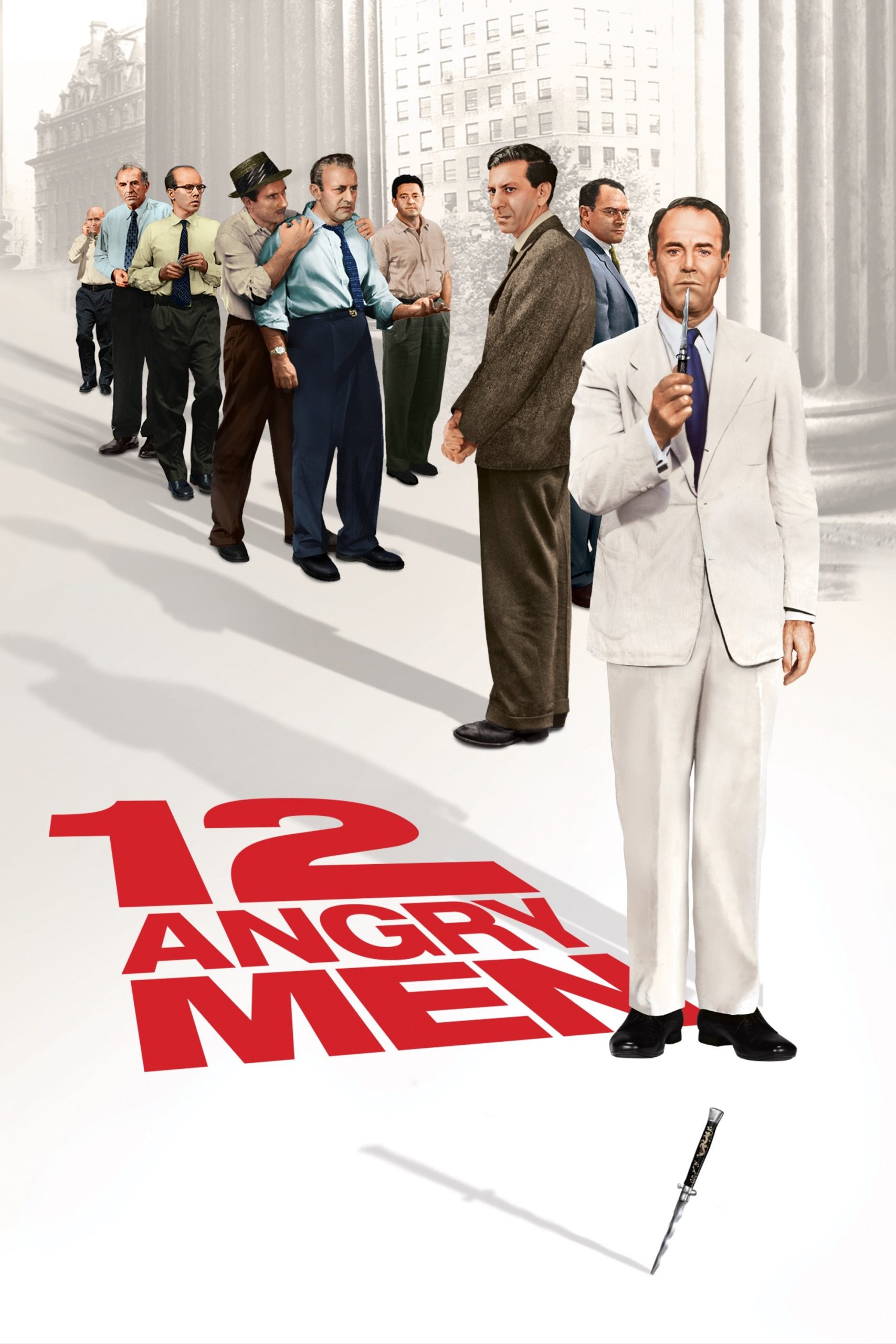
The Historical Era of the Film
When “12 Angry Men” was released in 1957, the United States found itself at a key transitional moment in its political, economic, and social history. Politically, the nation was entrenched in the Cold War, marked by a pervasive atmosphere of suspicion, anti-communism, and a strong emphasis on conformity and patriotism. The country was less than a decade removed from World War II, and although a period of economic prosperity unfolded — sometimes referred to as the postwar economic boom — underlying social tensions simmered beneath the seemingly stable surface.
The Eisenhower administration represented a center-right consensus that prioritized stability, economic growth, and the containment of communism. This era also saw the rise of the “Red Scare” and McCarthyism, where allegations of subversion and disloyalty could ruin reputations and careers. The federal government, shaped by recent experiences of war and global conflict, emphasized unity and a collective American identity, but fears of outside threats and internal dissent permeated every aspect of society.
Economically, the 1950s was a decade of relative affluence for a large part of the population. Suburbanization expanded, home ownership rose dramatically, and consumer goods such as cars, televisions, and household appliances became commonplace. These changes contributed to the creation of a large and growing middle class. Yet, these gains were not distributed evenly: women, minorities, and the poor often faced legal and social barriers that limited their opportunities. Segregation and discrimination were deeply entrenched, especially in the South, but also through more subtle forms across the nation.
Socially, rigid gender roles predominated, reinforced by postwar cultural messaging that pushed men into the workforce and women into domestic roles. Conformity was highly prized, and dissent, especially political dissent, was often viewed with suspicion. However, signs of impending social transformation were beginning to appear. The Supreme Court’s ruling in Brown v. Board of Education (1954) had declared segregation in public schools unconstitutional, galvanizing the nascent Civil Rights Movement and foreshadowing a decade of activism and legal challenges to institutional inequality. Meanwhile, a growing number of Americans were becoming aware of civil liberties issues, the rights of the accused, and the fairness of the justice system.
Social and Cultural Climate
The social and cultural climate of the mid-1950s in the United States stood at a crossroads between entrenched traditions and the burgeoning seeds of change. On one hand, American society frequently promoted the ideals of unity, conformity, and trust in established institutions — including the legal system. There was a strong cultural faith that the American way of life, including its legal and political systems, was both fair and exceptional. On the other hand, this faith occasionally masked persistent inequalities and injustices that were becoming harder to ignore.
Attitudes toward authority were generally respectful, if not deferential. Many Americans trusted police, judges, and public officials. Events such as the Army-McCarthy hearings in 1954, however, had begun to erode faith in the honesty and integrity of political institutions. At the same time, there was emerging concern about the dangers of groupthink, blind conformity, and prejudice — anxieties amplified by recent experiences of mass hysteria during the Red Scare and the repercussions of rigid social norms imposed during the war years.
Race and ethnicity continued to play a dominant role in social interactions and opportunities. While the film’s cast of jurors is all male and overwhelmingly white, this reflected the reality of the time: many states excluded women and people of color from jury duty, either by law or custom. Although the notion of a “jury of peers” was enshrined constitutionally, the practical delivery was far from equitable.
Popular culture, especially television and cinema, began to reflect some of these anxieties, albeit often in coded or indirect ways. Courtroom dramas and stories of justice and morality gained prominence, mirroring public fascination with the legal system and debates over individual rights. “12 Angry Men,” adapted from a successful teleplay, emerged within this context of cultural attention to the courts and the processes of justice. The postwar expansion of mass media — most notably through television — meant that more Americans were exposed to stories grappling with critical social and legal issues, often for the first time.
A growing awareness of psychological concepts — such as group dynamics, persuasion, and prejudice — also shaped cultural discourse. These ideas often surfaced in works of fiction, where the pressures of conformity and the importance of moral responsibility became central concerns. The film’s focus on one dissenting juror speaking out against the majority directly echoed these cultural conversations.
How the Era Influenced the Film
“12 Angry Men” was deeply shaped by its era’s values, anxieties, and evolving perspectives on law and society. The film’s setting — a New York City jury room — directly reflects the centrality of civic duty and the legal process in American identity during the 1950s. The jury trial was (and remains) emblematic of fairness and democratic participation. However, the film exposes the realities behind the process, such as the ease with which prejudice, apathy, and personal bias can undermine justice, reflecting contemporary concerns about the gap between American ideals and practice.
The almost entirely male and white cast of jurors was not a mere artistic choice; it was representative of who actually sat in real American jury boxes at the time. Many states still barred women and minorities from serving, either explicitly or through restrictive qualifications like property ownership, literacy, or exclusionary social practices. By focusing exclusively on this demographic, the film mirrored not just the composition of juries, but also the broader power structures of 1950s America.
The film’s release followed closely after both McCarthyism and the Army-McCarthy hearings, historical pivots that sharpened the national conversation about the dangers of hasty judgments, mob mentality, and the power of a single dissenting voice. The characters’ debates, confrontations, and eventual transformations echo postwar fears about conformity and the moral necessity to question popular opinion and authority — ideas that had been reinforced by the period’s recent political trauma.
Additionally, the film reflects the growing American fascination with psychological and sociological questions. The rise of social psychology studies, including the investigation of group behavior under pressure and the power of social conformity (underscored by real-world events like the Nuremberg Trials), found a cinematic parallel in the jury’s deliberations. The story’s focus on reasonable doubt, critical thinking, and the potential for bias in even the most “normal” citizens carries the imprint of a society grappling with the legacy of totalitarianism abroad and civil liberties at home.
Production wise, “12 Angry Men” was part of a broader movement toward more realistic and intimate filmmaking. With its confined setting and real-time narrative, the film abandoned elaborate sets and spectacle for psychological realism and intensity, echoing television’s intimate style and reflecting budget realities. This stylistic choice reinforced the immediacy of the issues depicted and allowed audiences to focus on the characters as stand-ins for societal attitudes of the era.
Audience and Critical Response at the Time
At its release, “12 Angry Men” was met with significant critical acclaim even if it was not an immediate commercial blockbuster. Contemporary critic reviews frequently praised the film’s realism, script, and ensemble acting. Prominent publications noted its powerful evocation of the American legal system’s strengths and weaknesses. Its focus on the responsibility of jurors, the risks of prejudice, and the importance of careful deliberation resonated with those engaged in then-ongoing debates about government overreach, civil rights, and the meaning of justice in a democratic society.
However, the film did not initially attract large popular audiences, in part due to its theatrical, dialogue-driven style and its adaptation from an already well-known television play. Some viewers, accustomed to the spectacle and romance that characterized much of 1950s cinema, found the film’s claustrophobic setting and intense conversations less appealing as entertainment. Still, among its supporters, “12 Angry Men” was regularly cited as a potent social drama with educational value, and it soon gained traction as a staple for civic education and discussion about the justice system.
The film also arrived at a time when the public conversation about civil rights and government accountability was intensifying. Educators, legal professionals, and later activists recognized its value as an exploration not only of legal process, but also of the American ideals of fairness and equality. The film was nominated for several Academy Awards, reflecting the industry’s recognition of its significance, though it ultimately lost major categories to more traditional epics. Over time, “12 Angry Men” developed a reputation as a classic, its initially modest box office performance overshadowed by its growing influence in legal and cultural circles.
Why Historical Context Matters Today
Understanding the historical context of “12 Angry Men” offers contemporary viewers richer insights into the film’s conception, its character dynamics, and its continued relevance. Knowledge of 1950s political tensions and social hierarchies clarifies why the issues addressed — including prejudice, the misuse of authority, and the importance of due process — would resonate so strongly with audiences of the time. The film does not occur in a vacuum; rather, it is both a product and a critique of the values, fears, and debates that defined its era.
The film’s homogenous jury, so striking today in its lack of diversity, serves as a historical document of exclusionary practices still legally sanctioned in the 1950s. Modern viewers, informed by later civil rights struggles and reforms in jury selection, can better appreciate how much progress has occurred and how far the justice system still has to go. The moral and civic anxieties at the film’s heart were not abstract philosophical concerns, but pressing issues in a society questioning its ability to live up to its constitutional ideals in an era of suspicion and change.
Appreciating the climate of McCarthyism, Cold War paranoia, and debates over conformity adds new significance to the film’s drama: each juror is not just an individual character, but a reflection of societal types and pressures. Recognizing the film’s roots in a time of both perceived unity and real division allows for a deeper understanding of its urgency and its vision for democracy. Ultimately, awareness of this context helps modern viewers grasp not only the historical stakes of the story, but also the evolution of American attitudes toward justice, fairness, and civic responsibility over time.
🎬 Check out today's best-selling movies on Amazon!
View Deals on Amazon